There’s a certain satisfaction in turning on a kitchen faucet and getting a glass of water that tastes clean, fresh and pleasantly ordinary. No strange aftertaste. No lingering smell. No wondering whether you should have bought another case of bottled water.
That’s one reason reverse osmosis systems have found their way into so many homes. They can provide highly treated drinking water right where people use it most — usually in the kitchen.
But a reverse osmosis system is more than a membrane tucked beneath the sink. The supporting components matter. Filters protect the membrane, monitoring features help homeowners understand system performance, and the physical design can determine whether the equipment feels convenient or like another appliance competing for cabinet space.
A little attention to those details can make a big difference.
The Membrane Is Only Part of the Story
Reverse osmosis works by pushing water through a semipermeable membrane under pressure. The membrane allows water to pass while reducing many dissolved substances.
Sounds straightforward, right? In practice, the water reaching that membrane matters enormously.
Sediment, chlorine and other substances can affect the membrane over time. That’s why many systems use filtration stages before the water reaches the RO membrane.
The purpose isn’t simply to add more boxes and cartridges. Each component should have a reason for being there.
Prefilters Help Protect the System
Imagine pouring muddy water through a very fine filter every day. Eventually, it’s going to struggle.
RO membranes aren’t quite dealing with muddy water in most homes, of course, but the basic idea is similar. Pretreatment helps keep unwanted material away from the membrane and allows the system to operate more effectively.
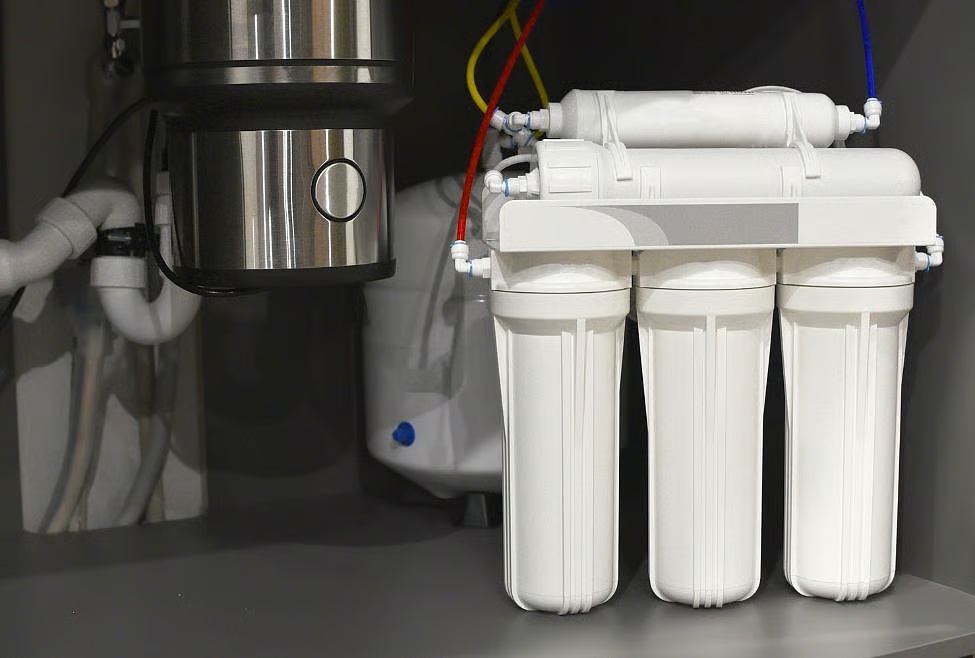
Some systems use specially formulated pre-and post-filters designed to work alongside the membrane. Depending on the system, these stages may address sediment, chlorine, taste and odor or other specific concerns.
The important word is “specific.” Not every cartridge is designed for the same purpose, so homeowners should check what their filters are actually rated to handle.
Post-Filters Finish the Job
After water passes through the membrane, it may go through another filtration stage before reaching the drinking faucet.
This final stage can help improve taste and provide an additional polishing step. In many systems, it uses activated carbon or another media selected for the intended application.
It’s easy to overlook this filter because it’s near the end of the process, but taste is what the homeowner ultimately experiences.
A technically impressive system that produces water nobody enjoys drinking isn’t much of a success.
Monitoring Makes Maintenance Easier
Water treatment equipment can be remarkably quiet when it’s working correctly. That’s great until something starts going wrong and you don’t notice.
Modern systems may include an electronic monitor that provides information about filter life, operating status or maintenance needs.
This doesn’t mean you can completely forget about the system. Monitoring technology is a convenience, not a substitute for maintenance.
Still, having a reminder on a display can be helpful. Life gets busy, and remembering when a filter was changed six months ago isn’t exactly a thrilling household task.
Know When Your Filters Need Attention
Filters don’t last forever.
Their service life depends on incoming water quality, household usage and the specific cartridge. A home with relatively clean municipal water may have different replacement needs from one with heavy sediment or other water-quality concerns.
A drop in water flow can be a clue that a filter is becoming loaded. A noticeable change in taste can be another.
Don’t wait until the water becomes unpleasant before checking the system. Following the manufacturer’s recommended replacement schedule is generally a better strategy.
Cabinet Space Is More Valuable Than It Looks
Anyone who has ever tried to organize the cabinet beneath a kitchen sink knows that space disappears quickly.
Cleaning products, trash bins, plumbing connections and miscellaneous objects somehow all end up competing for the same few square feet.
That’s why space-saving designs can be genuinely useful in an RO system. Compact configurations can make installation easier and leave more room for ordinary household storage.
Tankless systems can reduce the footprint further in some situations, although they may have different electrical and flow requirements.
The smallest system isn’t automatically the best one. It still needs to meet the home’s water demand and treatment requirements.
Tank Versus Tankless
Traditional RO systems often use a storage tank. Treated water is stored so that a useful volume is available when someone opens the drinking-water faucet.
Tankless systems produce water on demand and can be attractive where cabinet space is limited.
There are trade-offs to both designs.
A household with several people filling large bottles throughout the day may appreciate storage capacity. A smaller household might prefer a compact tankless arrangement.
Think about how the system will actually be used, not just how it looks on a product page.
Water Pressure Can Change Everything
Reverse osmosis depends on pressure to move water through the membrane.
If household pressure is too low, water production may be slower than expected. In some homes, a booster pump may be necessary.
Pressure can also change throughout the day, especially in larger properties or buildings with unusual plumbing arrangements.
Before installation, it’s worth checking whether the home’s pressure falls within the system’s operating range.
This is one of those technical details that seems boring until you’re standing at the sink waiting for a bottle to fill.
What About Wastewater?
RO systems typically produce a concentrated wastewater stream as part of the filtration process.
The exact amount varies according to membrane design, incoming pressure, temperature and system efficiency. Modern equipment may be designed to recover more treated water than older systems, but no RO system should be judged solely by the number of filtration stages.
If water conservation matters to your household, ask about the system’s recovery ratio and expected wastewater production before buying.
Knowing those numbers makes it easier to compare systems realistically.
Don’t Ignore Water Testing
It can be tempting to choose a reverse osmosis system simply because someone you know has one.
But their water isn’t necessarily your water.
Municipal supplies can vary, and private well water can have an entirely different set of characteristics. Hardness, sediment, iron, chlorine and other factors may influence which pretreatment stages are appropriate.
Testing can help establish what you’re actually dealing with.
It may also reveal that RO isn’t the only treatment you need. For example, significant whole-house hardness might call for a softener, while sediment may require dedicated pretreatment.
The goal is not to force every water problem into an RO system.
Installation Matters More Than It Seems
An RO system has several connections that need to be installed correctly, including water supply, drain and treated-water lines.
The storage tank, if present, needs appropriate positioning. The drinking faucet must be installed securely. Tubing should be routed carefully so it isn’t kinked or crushed.
A neat installation isn’t just about appearance. Proper routing makes future maintenance easier and reduces the chance of accidental damage.
If you’re not comfortable working with plumbing, professional installation can be a sensible choice.
Maintenance Is Part of Ownership
The easiest way to get frustrated with an RO system is to treat maintenance as optional.
Filters eventually need changing. Membranes have service lives. Connections should be inspected for leaks, and some systems require periodic sanitation.
Keep replacement dates somewhere easy to find. A note on your phone works perfectly well.
And if something changes — slower water production, unusual taste, unexpected noise or continuous drain flow — investigate sooner rather than later.
Small problems are usually easier to deal with than neglected ones.
Don’t Shop by Stage Count Alone
A system with six stages may look more impressive than one with four.
That doesn’t necessarily make it better.
What matters is whether each stage serves a useful purpose for your water. An unnecessary filter adds another replacement cost without necessarily improving the result.
Read the specifications. Look at membrane capacity, filter availability, pressure requirements, efficiency and maintenance schedules.
Then consider how all of that fits your household.
Good Design Should Feel Almost Invisible
The best home water-treatment system isn’t the one you constantly think about.
It should fit beneath the sink without making the cabinet unusable. It should produce water at a reasonable rate. It should remind you when maintenance is due and make filter replacement reasonably straightforward.
Most importantly, it should address the actual water-quality concerns that led you to consider treatment in the first place.
That means starting with the water rather than the equipment.
Test when appropriate. Understand the problem. Compare technologies honestly, and don’t be distracted by features that don’t serve a purpose.
A well-designed reverse osmosis system doesn’t need to dominate the kitchen. It can sit quietly beneath the counter, doing its job day after day.
And honestly, that’s probably the best compliment you can give any home appliance: you barely notice it’s there, except when you take that first cold drink of water and think, “Yep. That’s good.”