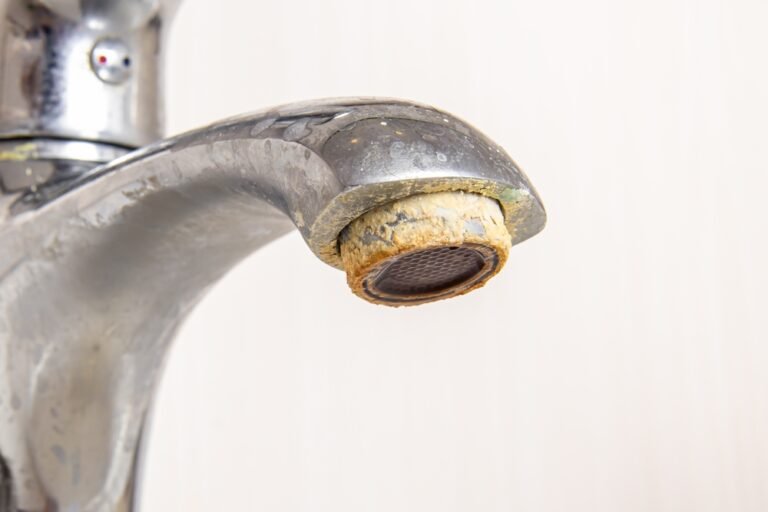
Choosing a water treatment system can feel like one of those household decisions that starts simple and somehow gets complicated. You notice hard-water spots on the shower glass, an odd taste in your drinking water, or buildup around the faucet. Then you start looking online and suddenly you’re looking at filters, softeners, reverse osmosis, carbon media, UV systems and a dozen different product descriptions.
It can be a lot.
The good news is that homeowners don’t necessarily need to understand every piece of treatment technology before making a decision. What matters more is understanding the water problem, asking sensible questions, and working with someone who can connect the two.
A good water treatment plan isn’t about adding equipment just for the sake of it. It’s about finding a practical answer to a real household concern.
Start With the Problem, Not the Product
A common mistake is beginning the search with a specific product.
Someone might hear that reverse osmosis produces great drinking water, for example, and immediately decide that’s what they need. Another homeowner may see a softener advertised and assume hard water is the only concern worth addressing.
But water quality doesn’t work quite that neatly.
The first step should be identifying what is actually happening. Is the concern hardness? Taste? Odor? Sediment? Chlorine? Something related to a private well? Or perhaps there isn’t a serious quality issue at all, and the homeowner simply wants better-tasting drinking water?
Those questions help narrow the field considerably.
Testing Gives You a Better Starting Point
Water testing is often the most sensible place to begin because appearance alone doesn’t tell you much.
Clear water can still contain dissolved minerals or other characteristics that affect how it tastes, behaves with soap, or interacts with plumbing and appliances. Testing can provide useful information about hardness, pH, iron and other factors depending on the test.
It’s a bit like taking your car to a mechanic because something sounds strange. You wouldn’t necessarily replace the entire engine before finding out what the noise is.
The same basic principle applies here.
Why Local Knowledge Can Be Useful
Water conditions aren’t identical everywhere. Municipal supplies, private wells and local plumbing environments can create very different treatment needs.
That makes a local service valuable in situations where someone needs more than a box delivered to the doorstep. A professional familiar with the area may understand common water-quality concerns, local installation conditions and the practical challenges homeowners encounter.
This doesn’t mean every local provider is automatically the right choice. It simply means local experience can be useful when combined with proper testing, transparent recommendations and competent installation.
Every Home Has Its Own Rhythm
Think about how differently households use water.
A single person living in a small apartment may have fairly modest demand. A large family might have several showers running in the morning, a washing machine going during the day, and a dishwasher working after dinner.
Then there are homes with large gardens, guest rooms, multiple bathrooms or unusually high water consumption.
A treatment system needs to make sense within that daily rhythm.
Capacity, flow rate and equipment size should reflect actual usage rather than an arbitrary “one-size-fits-all” approach.
Customized Doesn’t Have to Mean Complicated
There’s a misconception that a customized water treatment plan must involve lots of equipment and a complicated installation.
Not necessarily.
Sometimes customization means choosing a smaller system because that’s all the home really needs. In another case, it could mean combining a softener with a drinking-water filter. For a property with a specific water concern, a different treatment technology might be more appropriate.
The point is to match the equipment to the situation.
Well-designed customized solutions should solve specific problems without creating unnecessary complexity. If a professional can’t clearly explain why a particular component is being recommended, it’s reasonable to ask for more detail.
Don’t Ignore Water Pressure
Water pressure doesn’t always get much attention during the shopping process, but it should.
Treatment equipment introduces components into the plumbing system, and the system needs to work within appropriate operating conditions.
If several fixtures are being used at once, poor sizing or unsuitable equipment can become noticeable.
Ask about flow requirements and pressure. These technical details may not make for exciting conversation, but they’ll matter much more when everyone in the house is trying to get ready for work or school at the same time.
Installation Is Half the Job
Buying good equipment is only part of the process.
Installation determines whether the system is connected correctly, positioned sensibly and prepared for future maintenance. Drainage, plumbing connections, electrical requirements and available service space may all need consideration depending on the equipment.
A rushed installation can create problems that have nothing to do with the treatment technology itself.
It’s worth asking who will perform the installation, what the installation includes, and what happens if adjustments are needed afterward.
Think About Maintenance Before You Commit
Every treatment system has some kind of maintenance requirement.
Filters eventually need replacement. Salt-based equipment requires regular salt replenishment. Some components need periodic inspection or cleaning.
None of this is particularly difficult when it’s planned.
The trouble comes when maintenance gets forgotten for months or years. A system may continue operating, but performance can gradually decline.
Before buying, ask how often routine service is recommended and what the ongoing costs might look like. A system that seems affordable at first can feel very different if replacement parts are difficult to obtain.
Experience Matters, But So Does Communication
Technical knowledge is important, but homeowners also need clear communication.
A provider might have years of industry experience, yet that doesn’t help much if every explanation is filled with jargon.
Good expertise should be visible in the way someone evaluates the water, explains options, answers questions and acknowledges limitations.
You shouldn’t need a chemistry degree to understand why a particular treatment method is being recommended.
If someone can explain the reasoning in plain English, that’s a useful sign.
Be Careful With Big Promises
Water treatment marketing can sometimes make impressive claims.
Be cautious when a system is presented as a universal answer to every possible water-quality concern. Treatment technologies have specific purposes, and their effectiveness depends on the equipment, media, water chemistry, maintenance and installation.
Ask for specifics.
What does the system remove or reduce? Under what conditions? How often does it need maintenance? Are replacement filters readily available?
The more precise the answers, the easier it is to make an informed decision.
Look at the Long-Term Picture
A water treatment system should be viewed as part of the home, not just another appliance.
Think about how it will fit into your routine five years from now. Will maintenance be easy? Can parts be replaced? Will the system still meet household demand if your family grows or your water usage changes?
Those questions are often more important than a flashy feature list.
The right choice may not be the newest system or the one with the longest list of features. It may simply be the one that addresses the actual problem, fits the property, and can be maintained without a headache.
Better Water Starts With Better Decisions
There isn’t one perfect water treatment setup for every home. That’s probably a good thing.
It means the decision can be based on real conditions rather than a generic recommendation.
Test the water. Understand the problem. Consider your household’s usage. Ask about installation and maintenance. Most importantly, make sure you understand why a particular system is being suggested.
When those pieces come together, water treatment becomes much less confusing.
And eventually, the best system is the one you stop thinking about — because the water works the way you expect it to, day after day.