Water may look perfectly clear when it comes from the tap, but that doesn’t always tell the full story. Tiny particles, treatment chemicals, and materials picked up along the way can affect its taste, smell, and overall quality. In some homes, the problem is obvious—a metallic flavor, a faint swimming-pool smell, or particles collecting at the bottom of a glass. In others, the signs are much more subtle.
A good water filtration system can help address several of these concerns. Among the most common filtration goals are reducing sediment, improving chlorine-related taste and odor, and capturing fine particles that may affect household water. Understanding what these substances are and how filters handle them can help homeowners choose equipment that actually suits their needs.
What Is Sediment in Household Water?
Sediment refers to solid particles suspended in water. These particles may include sand, silt, dirt, rust, clay, and other debris. They can enter water through a private well, aging plumbing, construction activity, storage tanks, or disturbances in a municipal water line.
The amount of sediment in water can vary considerably. A home using well water may notice particles after heavy rain, while a property connected to a city supply might experience cloudy water following nearby pipe repairs. Sometimes the issue is not with the water source itself but with old plumbing inside the home.
Sediment is usually more of a quality and equipment concern than a direct health issue, although its presence can indicate that further testing is needed. Fine particles may clog faucet aerators, stain fixtures, interfere with appliances, and reduce the performance of other filtration equipment.
Why Sediment Filtration Is Important
Sediment filters are often installed as the first stage in a larger water-treatment system. Their job is relatively straightforward: capture suspended particles before they travel farther into the plumbing or reach more sensitive filters.
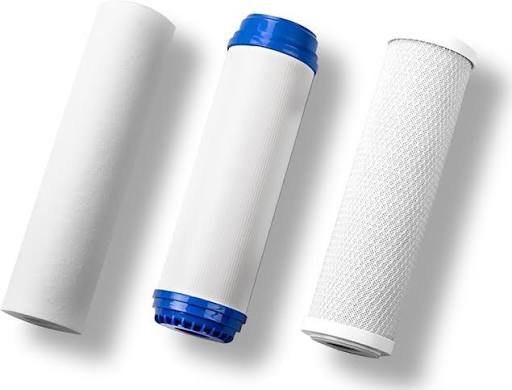
A basic sediment filter may use a spun-polypropylene cartridge, pleated material, or another filtering medium. The filter’s micron rating indicates the approximate size of particles it is designed to capture. A lower micron rating generally means finer filtration, although pressure loss and filter capacity must also be considered.
For homes with noticeable particles, a sediment filter can help protect water heaters, washing machines, faucets, and other equipment. It may also extend the life of carbon filters and reverse osmosis membranes by preventing larger particles from reaching them.
However, sediment filters do not remove dissolved minerals, chlorine, bacteria, or most chemicals. They are useful for one category of problem, not every water-quality issue.
Understanding Chlorine Taste and Odor
Chlorine is commonly used by municipal water systems to disinfect drinking water and help prevent the spread of harmful microorganisms. Its use plays an important role in public-water safety, but some people dislike the taste or smell it leaves behind.
The intensity can vary depending on the water source, treatment process, chlorine concentration, temperature, and the distance water travels through distribution pipes. Warm water often makes chlorine odors more noticeable, which is why the smell may seem stronger during a shower than when drinking cold water.
The phrase chlorine taste and odor describes one of the most common reasons homeowners install activated carbon filtration. Carbon can adsorb chlorine and certain organic compounds, improving the flavor and smell of treated water. Many people notice the difference first in drinking water, coffee, tea, and cooking.
It’s important to remember that chlorine itself is used for disinfection. Removing chlorine at the point of use is generally different from removing disinfectant throughout an entire plumbing system. Whole-house carbon systems should be selected and maintained carefully so that water remains appropriately protected from microbial growth within the plumbing.
How Activated Carbon Filters Work
Activated carbon is different from a basic screen or mesh filter. Instead of simply trapping particles by size, carbon works mainly through adsorption. Unwanted compounds attach to the surface of the carbon material as water passes through it.
Carbon filters are especially useful for reducing chlorine, certain tastes, odors, and some organic chemicals. The effectiveness depends on the type of carbon, the amount used, contact time, water chemistry, and the specific contaminant.
Coconut-shell carbon, coal-based carbon, and wood-based carbon are among the materials used in filtration. Each has different characteristics, and the best choice depends on the intended application.
Carbon filters do have limits. They are not designed to remove hardness minerals, nitrates, all metals, or microorganisms in every situation. They also become less effective as the carbon becomes exhausted. Replacing the cartridge on schedule is essential.
What Is Particulate Matter?
Particulate matter is a broad term for tiny solid or liquid particles suspended in a medium, including water. In household water, it may refer to fine particles that are too small to notice immediately but can still affect clarity and equipment performance.
The size of particulate matter can range from relatively visible grains to microscopic particles. Some may come from natural sources, while others can result from corrosion, pipe scale, construction, or disturbances in the water supply.
A sediment filter can reduce many forms of particulate matter, but the right filter depends on particle size and concentration. A filter designed to capture larger debris may not be effective against very fine particles. In some cases, multiple filtration stages are needed.
If water repeatedly appears cloudy or contains floating material, homeowners should avoid assuming that a filter alone will solve the issue. Testing can help determine whether the particles are harmless sediment, corrosion-related material, or a sign of another water-quality concern.
Choosing Between Point-of-Use and Whole-House Filtration
Point-of-use filters treat water at a specific location, such as a kitchen faucet or refrigerator line. They are often a practical choice when the main goal is better drinking and cooking water.
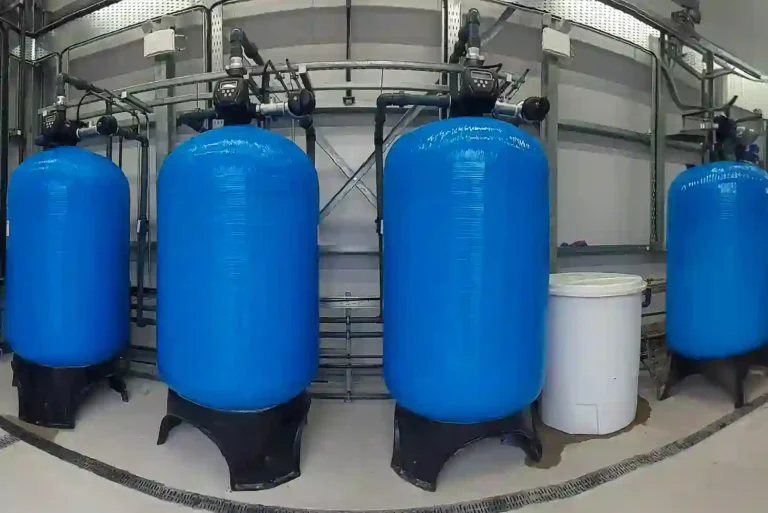
Whole-house systems treat water as it enters the property. These systems may be useful when sediment, chlorine odor, or other concerns affect showers, laundry, appliances, and multiple faucets. They are usually larger and may require more installation space and maintenance.
A whole-house carbon filter, for example, can reduce chlorine throughout the home. But it must be sized correctly for flow rate and water demand. If the system is too small, water may pass through too quickly for effective treatment. If it is poorly maintained, performance can decline.
Maintenance Makes the Difference
Every filter has a limited working life. Sediment cartridges can become clogged, causing reduced water pressure. Carbon filters can become exhausted and stop reducing chlorine or odors effectively.
Replacement schedules depend on water quality, household size, usage, and filter capacity. Homeowners should monitor changes in taste, odor, pressure, and appearance rather than waiting for a complete failure.
A professional can also help determine whether the system needs a prefilter, pressure regulator, bypass valve, or additional treatment stage. Proper installation matters just as much as the filter itself.
A Clearer Approach to Better Water
Improving household water quality begins with identifying the actual problem. Sediment, chlorine, and fine particles require different treatment approaches, and no single filter is designed to remove everything.
Sediment filters can protect plumbing and equipment from suspended debris. Activated carbon can improve chlorine-related taste and odor. More specialized systems may be necessary when testing reveals dissolved contaminants or microbiological concerns.
The smartest approach is to test the water, choose a system based on verified performance, and maintain it consistently. With the right combination of treatment and care, homeowners can enjoy cleaner-feeling water, better-tasting drinks, and fewer everyday frustrations at the tap.