Water has a quiet way of becoming part of the background. We drink it, cook with it, wash with it, and use it for countless household chores without giving it much thought. Then one morning the coffee tastes a little strange, the shower glass is covered in spots, or there’s an unfamiliar smell coming from the kitchen faucet. Suddenly, water quality is very much on your mind.
The good news is that many common water concerns can be addressed with the right treatment approach. The less exciting news? There isn’t one magical system that solves every water problem.
Water chemistry varies from home to home. A private well may have different challenges than a municipal supply, while two houses on the same street can still experience different issues because of plumbing, fixtures, or local conditions. That’s why understanding the water first is usually smarter than buying whatever system happens to be on sale.
Start by Understanding the Problem
Before choosing treatment equipment, take a close look at what’s actually happening.
Is there visible sediment in the water? Do you notice mineral scale around faucets? Does the water have an unusual taste or odor? Are you mainly concerned about drinking water, or does the entire household supply need attention?
A water test can provide useful answers. Depending on the situation, testing may look at hardness, pH, iron, manganese, dissolved solids, sediment, and other characteristics.
This information makes treatment much more targeted. Instead of throwing several different filters into the basement and hoping for the best, you can choose equipment for a reason.
It sounds obvious, but it’s a step homeowners sometimes skip.
When UV Treatment Is Worth Considering
Some water concerns are related to microorganisms rather than minerals or sediment.
For homes using private wells, microbial water quality can be an important consideration. An ultraviolet disinfection system uses UV light to inactivate microorganisms as water passes through the treatment chamber.
The technology is quite different from ordinary filtration. UV treatment doesn’t remove hardness, sediment, or dissolved chemicals. Instead, it provides a treatment barrier aimed at microorganisms.
That distinction matters.
For UV equipment to work properly, the system needs to be correctly sized and maintained. Water may also need pre-treatment to reduce particles or turbidity that could interfere with UV exposure. Lamp and component maintenance should follow the manufacturer’s recommendations.
In other words, installing a UV unit isn’t a “set it and forget it” project.
Reverse Osmosis Has a Different Job
If your biggest concern is drinking and cooking water, point-of-use treatment may be a better fit than treating the entire home.
Reverse osmosis systems use a semipermeable membrane to reduce many dissolved substances from water. They’re commonly installed under a kitchen sink and paired with additional filtration stages.
One advantage is that treatment can be concentrated where it matters most. You may not need every gallon used for laundry or bathing to go through a reverse osmosis membrane if your primary goal is improving water used for drinking.
There are trade-offs, naturally. Reverse osmosis systems require filter and membrane replacement, and many designs produce some reject water during operation.
Still, for the right water-quality concern, they can be a very useful part of a household treatment strategy.
Don’t Confuse Softening With Filtration
Hard water is another common reason people start looking into water treatment.
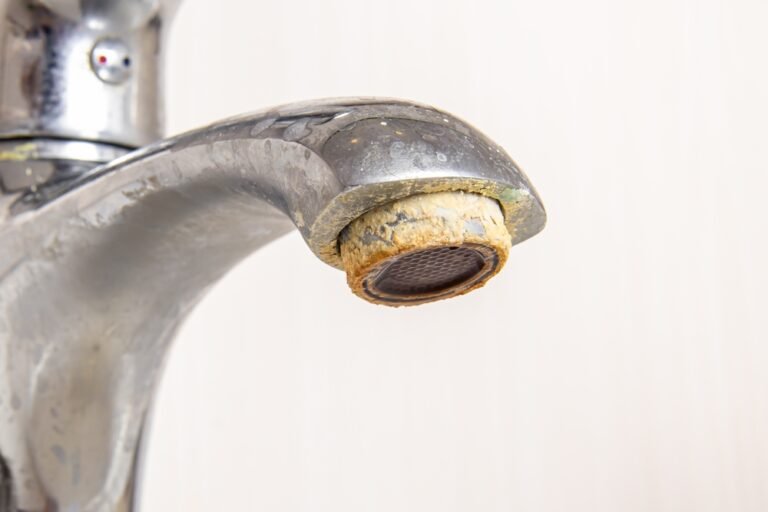
Calcium and magnesium can create scale on faucets, showerheads, fixtures, and appliances. You might see cloudy spots on dishes or notice that soap doesn’t lather quite the way you’d like.
A water softener is designed specifically to reduce hardness minerals. Filtration, on the other hand, can address different substances depending on the media and equipment being used.
These technologies aren’t interchangeable.
A homeowner with hard water and a separate taste or odor concern might need more than one treatment stage. Someone else may only need a softener.
Testing helps determine which situation you’re actually dealing with.
Think About the Entire Plumbing System
Water treatment doesn’t exist separately from the rest of the house.
Pressure, pipe size, flow rate, valves, drainage, and available installation space all influence how well a treatment system will perform.
Imagine a busy morning with two showers running while the dishwasher starts. If treatment equipment isn’t properly sized for household demand, water flow can become noticeably weaker.
Existing plumbing problems can matter too. Corroded pipes, old valves, leaks, or low pressure may need attention before new equipment is installed.
A treatment system shouldn’t be used to mask a plumbing problem.
Equipment Quality Matters, but So Does Fit
Homeowners often focus heavily on the equipment brand. That’s understandable. Nobody wants to buy something expensive only to discover that replacement parts are difficult to find or service is unavailable.
Brands such as Hellenbrand & Drop are part of a broader market that includes water softening and treatment equipment for different household applications.
But the brand name alone shouldn’t make the decision.
Look at the equipment’s intended application, capacity, service requirements, warranty, replacement components, and compatibility with your water conditions. A well-known product can still be the wrong choice if it isn’t properly sized for your home.
Think about the entire ownership experience, not just the box sitting in the showroom.
Installation Is More Important Than It Looks
Water treatment equipment involves plumbing connections, valves, drains, and sometimes electrical components.
Poor installation can lead to leaks, restricted flow, difficult maintenance, or equipment that simply doesn’t perform as expected.
A good installation should also leave the equipment accessible. Filters will eventually need changing. Valves may require servicing. Components wear out.
There’s nothing particularly convenient about installing a great filtration system in a corner where you can barely reach it.
Professional installation can help make sure the equipment is integrated properly with the home’s existing plumbing while also allowing future maintenance to be carried out without unnecessary headaches.
Maintenance Keeps the System Doing Its Job
Water treatment isn’t completely maintenance-free, despite what some advertisements might imply.
Filters eventually become saturated. Membranes need replacement. UV lamps and related components require periodic attention. Softener systems may need servicing and inspection.
Ignoring maintenance can gradually reduce performance.
The changes might be subtle at first. Water doesn’t taste quite as good. Pressure drops slightly. Mineral buildup starts coming back. By the time the problem becomes obvious, the equipment may have been operating below its intended performance for quite a while.
A simple maintenance calendar can help. Record filter changes, service appointments, installation dates, and manufacturer recommendations.
It’s not glamorous, but neither is changing the oil in a car. You do it because the alternative usually costs more.
Don’t Buy Treatment Based on Marketing Alone
Water treatment advertisements can make almost any product sound indispensable.
Advanced technology. Premium purification. Maximum protection. Multi-stage performance.
Those phrases aren’t necessarily wrong, but they don’t answer the most important question: is this system right for your water?
Ask what the equipment is designed to reduce. Ask what testing supports that need. Find out how often filters must be replaced and what those replacements cost.
Also consider water usage, available space, maintenance requirements, installation expenses, and long-term operating costs.
Sometimes a straightforward system is the smartest option.
Better Water Starts With a Better Process
Choosing water treatment doesn’t have to feel like navigating a maze of tanks, cartridges, membranes, and technical terminology.
Start with the water itself. Test it when appropriate. Identify the specific concern. Then select treatment technology that addresses that concern without adding unnecessary complexity.
A UV system may make sense for a particular microbial concern. Reverse osmosis can be useful when point-of-use drinking-water treatment is the priority. Softening can help when hardness is the main nuisance.
The important thing is matching the solution to the problem.
In the end, good water treatment should fade into the background. You shouldn’t have to think about it every time you fill a glass or turn on the shower.
The system should simply work, quietly and reliably, while making everyday water more pleasant to live with.
And that’s really the goal—not the fanciest equipment, not the longest list of features, but water treatment that makes sense for your home and continues to make sense years after installation.