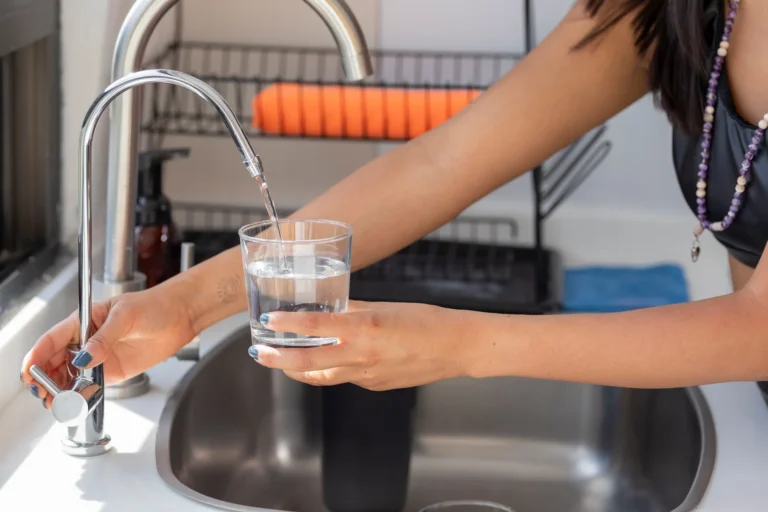
You turn on the faucet and the water looks perfectly clear. No strange color, no obvious particles, nothing that makes you stop and wonder whether something is wrong. Yet sometimes water can have problems that aren’t visible at all.
Maybe the coffee tastes slightly different. Perhaps there’s a metallic smell after running the tap for a few seconds. Or maybe the bathtub has developed stubborn stains that keep coming back no matter how often you clean them.
Water quality isn’t always obvious from appearance alone. Different minerals and compounds can affect taste, smell, plumbing, fixtures, and appliances in ways that build up gradually. Understanding those signs can help homeowners decide when testing or treatment is worth considering.
The Clues May Be Sitting Around Your Faucet
One of the easiest places to spot water-related problems is around plumbing fixtures.
Orange or reddish staining may point toward iron deposits, particularly when iron is present in groundwater. These deposits can leave marks on sinks, toilets, tubs, and laundry.
The appearance can be frustrating because regular household cleaners may remove existing stains without addressing the reason they’re appearing in the first place.
Iron can occur naturally in groundwater, and the amount can vary considerably between water sources. If staining repeatedly returns, testing can help determine whether iron is actually responsible rather than relying on appearance alone.
Taste Can Tell You Something, But Not Everything
Taste is one of the first things people notice when water quality changes.
Some water has a metallic character. Other water may taste flat, earthy, or simply different from what you’re used to. Changes can sometimes result from minerals, disinfectants, plumbing materials, or other factors.
Municipal water supplies commonly use chlorine as a disinfectant. It plays an important role in controlling harmful microorganisms, but some people dislike its taste or smell.
Carbon filtration is often used to improve taste and odor associated with chlorine and certain organic compounds. The effectiveness depends on the specific filter, contact time, water chemistry, and contaminant concentration.
So if your water suddenly tastes different, don’t automatically assume something dangerous has entered the supply. But don’t ignore a persistent change either.
Unpleasant Smells Deserve Attention
Water should not normally have a strong or unusual smell.
Certain naturally occurring compounds can produce a sulfur-like or rotten-egg odor. Organic material, chlorine, or other substances may create different smells.
Persistent odors can make even clean-looking water unpleasant to use. They may also point toward a treatment issue, plumbing problem, or characteristic of the source water.
The important thing is to identify the cause.
If the smell appears only from one faucet, for example, the problem could be localized to that fixture or part of the plumbing. If every tap has the same odor, the source may be farther upstream.
A professional water test can help narrow down the possibilities.
Clear Water Isn’t Always Perfect Water
It’s easy to assume that clear water means clean water.
Unfortunately, many dissolved substances are invisible. You can’t reliably identify hardness, dissolved minerals, or many other water-quality characteristics simply by looking at a glass.
That’s why testing is useful.
A basic water analysis may evaluate hardness, pH, iron, manganese, chlorine, dissolved solids, and other parameters. More specialized tests can be used when there is concern about particular contaminants.
Testing doesn’t necessarily mean you’ll discover a problem. Sometimes the result is reassuring — and that’s valuable information too.
Hard Water Leaves Its Own Signature
Mineral scale is another common clue.
White deposits around faucets, showerheads, kettles, and glass doors can be associated with hard water. Calcium and magnesium are the primary minerals responsible for hardness.
A water softener can reduce these hardness minerals through ion exchange. The result may be less scale throughout the plumbing system and fewer mineral deposits on fixtures.
However, softening doesn’t address every water-quality issue. If iron, chlorine, sediment, or another concern is present, additional treatment may be necessary.
Again, it comes down to knowing what’s actually in the water.
Iron Isn’t Always Just a Stain
Iron can affect more than appearance.
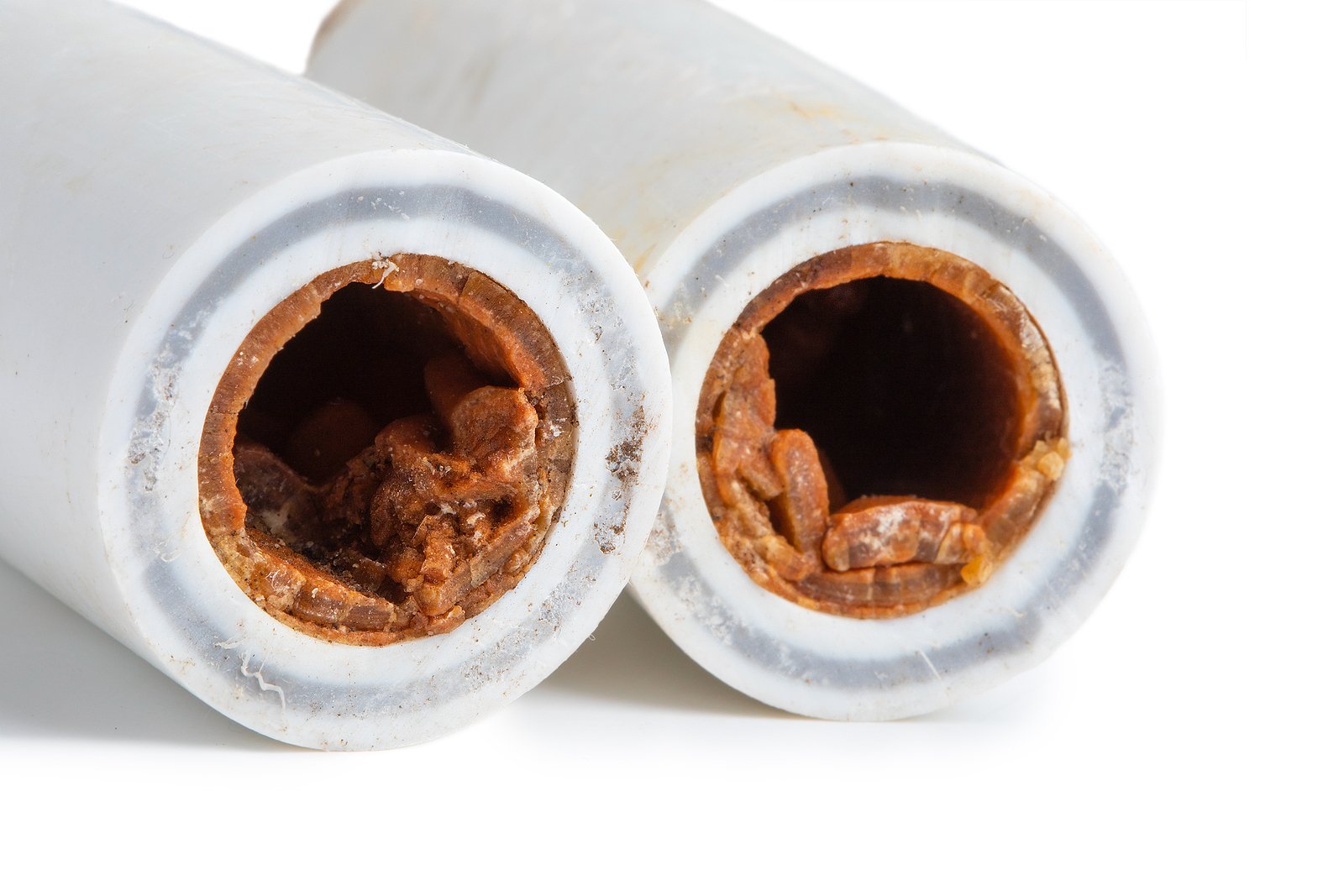
Depending on its form and concentration, iron may cause metallic taste, staining, or deposits inside plumbing and fixtures. In some cases, iron-related bacteria can also contribute to slime or unpleasant conditions.
Treatment depends on the type and concentration of iron present.
Some systems use specialized filtration media, oxidation, aeration, or other methods. A softener may reduce certain forms of iron under appropriate conditions, but it isn’t automatically the right solution for every iron problem.
This is why a water test is more useful than simply buying the first “iron filter” you see online.
Your Appliances Can Provide Warning Signs
Water-quality issues often show up in appliances before homeowners connect the dots.
Water heaters can accumulate scale. Ice makers and coffee machines can develop mineral buildup. Dishwashers may leave spots on glassware.
If an appliance seems to require cleaning much more frequently than expected, look at the water as one possible factor.
This doesn’t mean water is always responsible. Appliance age, maintenance, temperature settings, and plumbing conditions can also contribute.
Still, recurring buildup is a reasonable reason to investigate.
Don’t Overlook the Plumbing
Water quality can change after water enters your property.
Older plumbing, fixtures, storage tanks, and connections can affect what comes out of the faucet. If only one fixture has an unusual taste, color, or smell, the problem may be local rather than related to the entire water supply.
Run the affected faucet for a short period and compare it with another fixture. If the difference persists, consider having the plumbing inspected.
This simple comparison can prevent you from spending money on whole-house treatment when the actual problem is confined to one fixture.
Choosing Filtration Based on the Problem
Once testing identifies a concern, treatment becomes much easier to plan.
Sediment filters are useful for particles. Carbon filtration can improve taste and reduce certain compounds. Water softeners address hardness. Specialized media may be used for iron, manganese, or other specific concerns. Reverse osmosis can provide more intensive treatment for drinking water.
No single filter removes everything.
The right system depends on the water chemistry, household demand, flow rate, pressure, and treatment goal.
A good water-treatment professional should be able to explain what each component is intended to accomplish. If the explanation is simply “this is the best system,” ask a few more questions.
Maintenance Keeps Treatment Effective
Even a well-designed system needs attention.
Filters become loaded. Carbon eventually loses adsorption capacity. Softening systems require regeneration and appropriate settings. Specialized media may need replacement or servicing.
Keep track of maintenance dates and pay attention to changes in water quality.
If a system suddenly seems less effective, don’t wait until the problem becomes severe. A clogged filter or incorrect setting may be all that’s wrong.
Regular maintenance is usually much easier than dealing with a complete system failure.
Know When to Test Again
Water conditions aren’t necessarily fixed forever.
Changes in the water source, plumbing work, seasonal conditions, or changes in household usage can affect treatment performance.
If something suddenly seems different, retesting can provide useful information. It also helps confirm whether an existing treatment system is still addressing the right problem.
Testing is particularly valuable for private well owners, who may need more regular monitoring depending on local conditions and potential contamination risks.
Pay Attention to the Small Signs
Water doesn’t always announce a problem dramatically. More often, the clues are small: a stain that keeps returning, a smell you can’t quite explain, or a filter that seems to stop working sooner than expected.
Those little signs are worth noticing.
You don’t need to panic every time your faucet has a white spot. But if changes are persistent, widespread, or unusual, testing is a sensible next step.
Good water treatment begins with understanding rather than guessing. Once you know what’s in the water, you can choose equipment that addresses the actual issue and avoid paying for technology you don’t need.
In the end, the goal is pretty simple. Your water should work for your household without creating a constant list of cleaning jobs, equipment problems, and unanswered questions.
Sometimes the best solution is a new filter. Sometimes it’s a plumbing repair. And sometimes the test results show that your water is doing just fine.
Knowing which one you’re dealing with is the real win.