You can learn quite a lot about water without being a scientist. Look closely at the showerhead. Check the bottom of a glass after it sits for a few minutes. Notice the taste of your morning coffee. Pay attention to the stains that keep coming back no matter how often you clean them.
Still, some of the things that affect household water can’t be seen at all.
That’s what makes water quality a little tricky. Water may look perfectly clear while carrying dissolved minerals or other substances that influence taste, odor, plumbing and appliances. And when something does appear in the water, it’s not always obvious what caused it.
The first step, then, isn’t necessarily buying a filter. It’s figuring out what you’re dealing with.
Clear Water Doesn’t Tell the Whole Story
A glass of clear water can look reassuring, but appearance only tells you so much.
Water can contain dissolved minerals and other contaminants that aren’t visible to the naked eye. Some may affect taste or odor, while others can contribute to deposits or other household concerns.
This doesn’t mean every unseen substance is dangerous, or that every home needs extensive treatment. Water naturally contains minerals, and the appropriate treatment depends on the source and intended use.
Testing provides a much better starting point than guessing.
For municipal water, homeowners can often begin by reviewing available local water-quality information and then consider additional testing if they have a specific concern. Private well owners may have different testing needs based on their location and water source.
Iron Can Leave More Than a Bad Impression
Iron is another water-quality concern that can be surprisingly persistent.
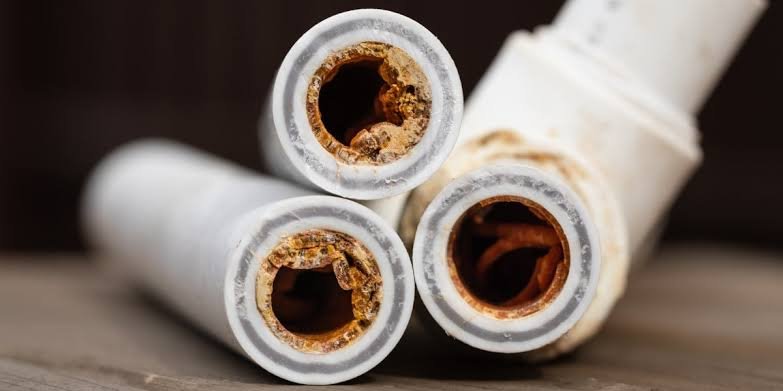
When iron is present at elevated levels, homeowners may notice rusty-colored staining around sinks, toilets and tubs. Water can sometimes have a metallic taste, and laundry may develop stubborn discoloration.
The appearance can be particularly frustrating because the water may look fine when it first comes out of the tap and change color after exposure to air.
Treatment for iron depends on its form and concentration. Ferrous, or dissolved, iron behaves differently from ferric iron, which is already oxidized and may appear as visible particles.
That’s why a generic filter isn’t necessarily the answer.
A proper water analysis can help determine which treatment approach is appropriate.
Sediment Is a Different Kind of Problem
Sometimes the issue isn’t something dissolved in the water at all.
Sediment refers to particles that can enter a water supply or become disturbed within plumbing. Sand, silt, rust particles and other debris may contribute to cloudy water, clogged aerators or premature wear on certain equipment.
Private wells can be particularly susceptible to sediment, although municipal systems and household plumbing can experience particle-related issues as well.
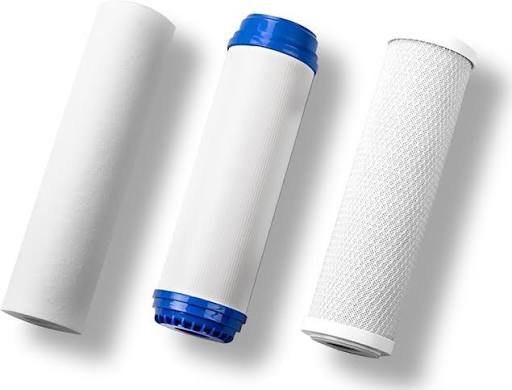
A sediment filter can often help capture particulate matter, but selecting the right filter involves more than choosing the finest possible filtration.
Very fine filtration can restrict flow if the system isn’t properly sized. A filter also needs to be maintained because collected material eventually reduces its effectiveness.
Why Water Testing Comes First
It’s tempting to search online for a treatment system that matches a symptom.
“Rusty water filter.”
“Best filter for bad taste.”
“Hard water solution.”
That approach may produce plenty of shopping results, but it doesn’t necessarily produce the right answer.
Testing can identify characteristics that aren’t obvious from appearance alone. Depending on the situation, a water test may evaluate hardness, pH, iron, manganese, chlorine, dissolved solids and other parameters.
The goal is to build a clearer picture.
Once you know what is present, you can compare treatment technologies based on their actual purpose.
Different Problems Need Different Technology
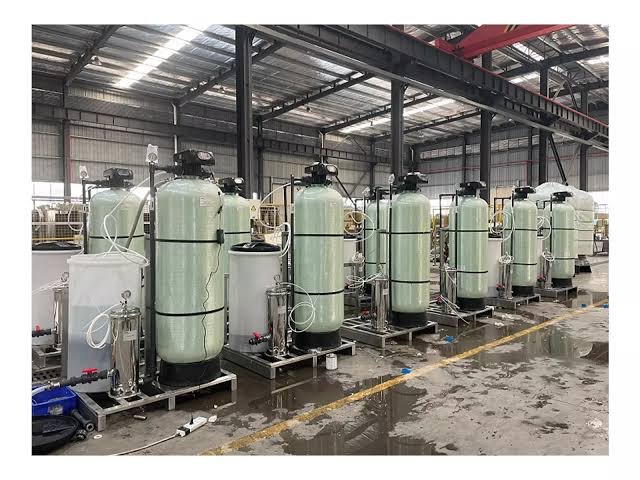
Water treatment is not one giant category where every system does the same job.
Sediment filters are designed to capture particles. Carbon filtration can help with certain tastes, odors and chemicals. Water softeners are intended primarily to address hardness caused by calcium and magnesium.
Other technologies, such as reverse osmosis, can reduce many dissolved substances from treated drinking water.
The important thing is matching the treatment to the problem.
If iron is the concern, choose technology designed for the form and concentration of iron present. If sediment is the issue, focus on appropriate particle filtration. If hardness is causing scale, a softening approach may be more relevant.
It sounds obvious, but this simple principle can prevent a lot of wasted money.
Well Water Deserves Extra Attention
Private wells don’t have the same treatment infrastructure as municipal water supplies.
The quality of well water is influenced by groundwater conditions, surrounding geology and local environmental factors. Those conditions can change, too.
A homeowner may notice a new taste, odor or color and assume the water simply needs a filter. Sometimes that’s true. Sometimes the change is a sign that the water should be tested more thoroughly.
Routine testing is especially valuable for well owners because it establishes a baseline.
When something changes, you’ll have previous results to compare against.
Household Plumbing Can Affect What You See
Not every water-quality complaint starts at the source.
Older plumbing, corroding pipes, water heaters and fixtures can influence what comes out of a faucet.
If discoloration appears only at one fixture, for example, the issue may be localized rather than related to the entire water supply.
Try observing whether the problem occurs at multiple faucets. Check whether it appears only with hot water or both hot and cold water.
These simple observations can provide useful clues before you call a professional.
Don’t Choose the Finest Filter Automatically
There’s a common assumption that smaller filtration pores always mean better water.
Not necessarily.
A very fine filter can capture smaller particles, but it may also reduce flow more quickly and require more frequent replacement. If the incoming water contains a lot of sediment, the filter can become clogged sooner than expected.
The right filtration level depends on the application.
Pre-filtration can sometimes be useful when larger particles are present. More advanced treatment can then address specific dissolved substances downstream.
Good system design is about layers working together, not simply making one filter as restrictive as possible.
Maintenance Is Part of the Treatment Process
Even the right equipment won’t work forever without attention.
Sediment filters collect particles. Carbon media eventually becomes exhausted. Iron-treatment equipment may require regeneration, cleaning or other service depending on its design.
A neglected system can gradually lose performance.
Keep replacement schedules somewhere you’ll actually remember them. A note on the calendar is enough. Don’t wait until water pressure drops dramatically or taste changes before checking the filter.
Routine maintenance is usually much easier than emergency troubleshooting.
Consider the Whole Home
Think about where the water is being used.
Drinking and cooking may call for point-of-use treatment. Water used throughout the home may require a whole-house approach if the concern affects showers, laundry, fixtures and appliances.
The right setup depends on what you’re trying to accomplish.
There’s little benefit in treating every gallon of household water if your only concern is drinking-water taste. Likewise, a kitchen filter won’t address a whole-home sediment problem.
Treatment should be targeted.
Don’t Let Marketing Replace Evidence
Water treatment products can come with impressive descriptions.
“Advanced.” “Premium.” “Complete.” “Next-generation.”
Those words aren’t necessarily meaningful without supporting information.
Look for specific claims about what the equipment is designed to reduce. Where applicable, check whether the product has relevant third-party certification. Ask about maintenance, capacity and expected performance under your actual water conditions.
A trustworthy recommendation should be explainable without a sales pitch.
Better Water Starts With Better Information
The biggest lesson is surprisingly simple: don’t guess when you can test.
If your water has unusual staining, particles, taste or odor, pay attention. Those signs are worth investigating, but they aren’t enough by themselves to determine the correct treatment.
Understand your source. Test when appropriate. Identify the actual concern. Then choose equipment designed for that particular job.
Whether the issue involves dissolved substances, iron, sediment or something else entirely, the goal isn’t to make the water sound perfect on paper.
It’s to make it work better for your home.
When the right treatment is selected and maintained properly, the improvement can be wonderfully uneventful. Cleaner fixtures. Better-tasting water. Fewer surprises.
And perhaps the nicest part is that you don’t need to think about what’s happening behind the scenes.
You simply turn on the tap, and the water is there — exactly as it should be.