Water is wonderfully ordinary. We pour it into coffee makers, fill pots for pasta, rinse vegetables, wash dishes, and drink it without giving the faucet much thought. Then something changes. The water tastes different, leaves spots behind, or starts smelling a little strange.
Suddenly, water becomes a project.
The good news is that improving household water quality doesn’t have to be complicated. What matters most is understanding where your water comes from, identifying the characteristics that concern you, and choosing treatment equipment that actually fits those conditions.
A water purification system can be an excellent investment, but only when it’s selected for the job it needs to perform. More filters, more stages, and a bigger price tag don’t automatically mean better results.
Begin With the Water You Already Have
Before shopping for treatment equipment, spend a little time learning about your water.
Does it come from a public utility? A private well? A community system? Has the water always tasted this way, or is the change recent?
Those questions matter because different sources can have very different characteristics.
Hardness, iron, manganese, sediment, chlorine taste, and dissolved substances can all affect household water. Some concerns are mostly about convenience, while others may require specific testing and treatment.
A glass of clear water only tells you what the water looks like. It doesn’t provide a complete picture of what’s dissolved in it.
Municipal and Well Water Aren’t the Same
Homes can receive water from municipal and well water supplies, but the way those sources are managed is quite different.
Municipal water is generally treated before distribution and may contain disinfectants used to control microorganisms. Some homeowners notice the taste or smell of those disinfectants and choose additional filtration for comfort.
Private wells don’t go through the same centralized treatment process. Their characteristics can depend on local geology, groundwater conditions, the construction of the well, and nearby land use.
That’s one reason well owners should pay attention to routine testing and local recommendations. Water that has been perfectly fine for years can still change.
Testing Is More Useful Than Guessing
It’s easy to diagnose water problems from what you can see.
White deposits? Must be hard water.
Orange stains? Probably iron.
Strange smell? Maybe chlorine.
Sometimes those assumptions are right. Sometimes they aren’t.
Water testing provides a more reliable starting point. Depending on the source and concerns, testing may examine hardness, pH, iron, manganese, dissolved solids, nitrates, bacteria, or other characteristics.
The results can help you determine which treatment options make sense.
It also helps prevent unnecessary spending. There’s little value in installing equipment designed for a problem you don’t actually have.
Hard Water Can Affect Everyday Life
Hardness is one of the most common reasons homeowners look into water treatment.
Calcium and magnesium are naturally occurring minerals. At elevated levels, though, they can produce scale on faucets, showerheads, appliances, and glassware.
You might notice that soap doesn’t rinse quite as easily. Your shower door seems permanently covered in spots. The kettle develops a crusty layer.
None of this makes for an especially exciting Saturday morning.
A properly sized water softener can help reduce hardness and limit scale formation throughout the home. But it doesn’t replace filtration for every other water-quality concern.
Treatment should match the problem.
Taste and Odor Can Tell You Something
Sometimes the biggest motivation is simply that the water isn’t pleasant.
Chlorine taste is common in some treated public supplies. Iron can contribute to metallic flavors. Certain naturally occurring compounds may produce earthy or sulfur-like odors.
Activated carbon filtration is often used to improve certain taste and odor issues, but the appropriate approach depends on the cause.
If a taste or smell suddenly appears, don’t just cover it up with a filter and forget about it. A change in water characteristics is worth investigating.
The water may be completely fine, or it may point toward a problem that requires a different treatment strategy.
Drinking Water May Need Focused Treatment
You don’t necessarily have to treat every gallon of water in the house in exactly the same way.
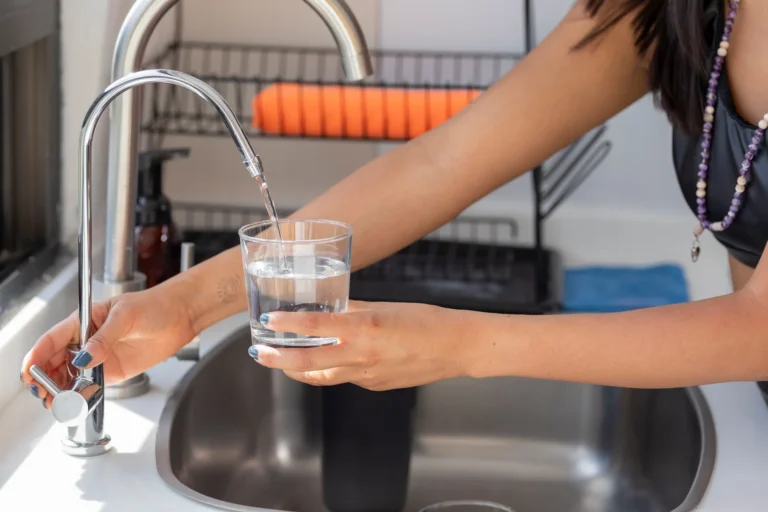
If your primary concern is the water you drink and cook with, a point-of-use system can provide targeted treatment at the kitchen sink.
Depending on test results, options may include carbon filtration, reverse osmosis, or another specialized method.
This can be a practical approach for households that want additional treatment for drinking water without installing a large system on the home’s entire incoming supply.
What Does “Pure Water” Really Mean?
Marketing often uses phrases such as pure water because they sound reassuring. But from a practical standpoint, water treatment is about reducing specific substances to appropriate levels, not creating some magical form of water with absolutely nothing else in it.
Water naturally contains minerals and other dissolved substances. Some are harmless and even expected.
The better question is: what are you trying to reduce, and why?
That shift in thinking makes treatment decisions much easier.
Instead of chasing a vague promise of “purity,” you can focus on measurable water-quality goals.
Reverse Osmosis Has a Specific Role
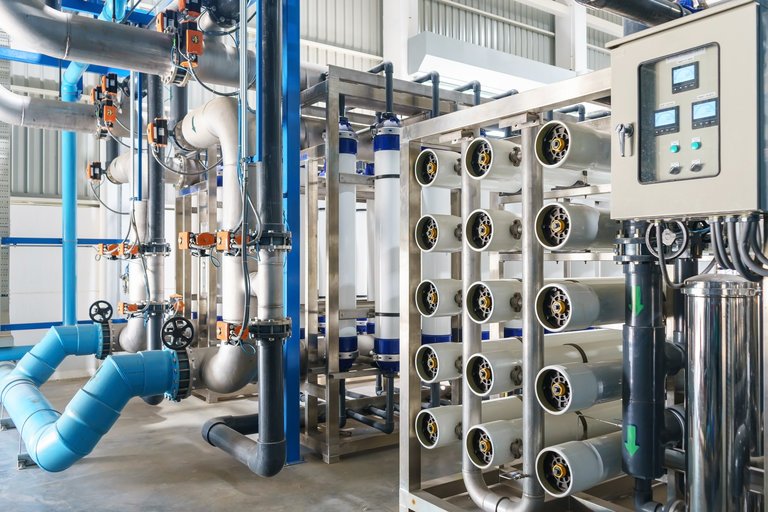
Reverse osmosis is popular for drinking-water treatment because it can reduce many dissolved substances that conventional filters may leave behind.
The process uses pressure to move water through a semipermeable membrane. Pre-filters commonly protect the membrane from sediment and chlorine, while post-treatment can improve taste.
But reverse osmosis isn’t automatically the answer for every home.
It requires suitable pressure, regular maintenance, and proper installation. It also produces reject water during operation.
For a homeowner whose only complaint is mild chlorine taste, a simpler carbon filter may be perfectly adequate.
Whole-House Treatment Can Address Broader Problems
When water issues affect multiple fixtures, a whole-house system may be more appropriate.
Imagine scale appearing in every bathroom, staining in the laundry room, and mineral buildup around kitchen faucets. Treating only one drinking-water tap won’t address the source of those problems.
Whole-house systems can be designed around specific needs, such as softening, sediment reduction, carbon filtration, or iron treatment.
The system should be sized according to household demand and water conditions.
Bigger isn’t necessarily better.
Don’t Forget About Maintenance
Water treatment equipment needs care.
Filters eventually become saturated. Reverse osmosis membranes require replacement. Softening equipment may need salt and periodic service. Other systems may require media replacement or cleaning.
It’s easy to forget because the equipment usually sits quietly in a corner.
Set reminders for maintenance and keep track of filter changes. If water quality changes, consider retesting rather than assuming the equipment is still performing exactly as intended.
A neglected treatment system can become much less useful than the day it was installed.
Consider the Total Cost
The initial purchase price isn’t the whole story.
Think about installation, replacement cartridges, membrane costs, service, electricity, salt, and other consumables. Also consider whether replacement parts are readily available.
A system that’s inexpensive upfront may cost more over several years if maintenance is frequent or components are difficult to source.
At the same time, don’t pay for technology simply because it sounds impressive.
Good value comes from equipment that solves a real problem and remains practical to own.
Ask Questions Before You Commit
A good water-treatment provider should be comfortable answering straightforward questions.
What did the water test show? What does the proposed system reduce? What doesn’t it remove? How often do filters need replacement? What maintenance is required? What are the ongoing costs?
You shouldn’t have to understand every technical detail before making a decision.
But you should understand why the system is being recommended.
That distinction matters.
Better Water Begins With Better Information
Water purification doesn’t need to be a guessing game.
Start with the source. Test the water. Identify the actual concern. Then compare treatment technologies based on what the results tell you.
Maybe you need softening throughout the home. Maybe a kitchen filtration system is enough. Perhaps your water has multiple characteristics that call for a combination of treatment methods.
There isn’t one perfect setup for every household.
The smartest choice is the one that fits your water, your home, your budget, and your willingness to maintain it.
Once you’ve done that, water treatment becomes much less mysterious. You don’t have to think about the equipment every time you turn on the faucet.
You simply get the kind of water your home needs—and that’s really the point.