Chemical processing plants, offshore platforms, water treatment facilities and pharmaceutical manufacturing environments expose electrical connectors to challenges that standard industrial specifications do not fully anticipate. Salt spray, acid mist, solvent vapour, cleaning chemicals and high-humidity cycling all attack connectors through mechanisms that differ from the vibration, shock and temperature extremes that drive most connector standards. Specifying correctly for these environments requires a systematic look at shell material, insert material, plating, sealing geometry and accessory selection — with the specific chemical exposure profile of the installation in mind from the first line of the specification.
Shell Material Selection
The majority of circular connectors use aluminium alloy shells, which offer an excellent strength-to-weight ratio and machine well for complex geometries. In chemical environments, bare aluminium corrodes rapidly, so the question is which surface treatment is appropriate. Anodising provides a hard, pore-free oxide layer with good resistance to many chemicals, but it is non-conductive and therefore not suitable when the shell must provide EMC shielding continuity. Electroless nickel plating offers broad chemical resistance and maintains conductivity, making it a practical choice for most process-industry applications. Where strong acids or alkalis are present, stainless steel shells — either 316L or 17-4PH depending on strength requirements — provide substantially greater chemical resistance than treated aluminium, at a cost and weight penalty that is usually acceptable for a small number of critical connections.
Composite and thermoplastic shells are increasingly available in circular connector formats and offer chemical resistance profiles that metal shells cannot match in certain environments, particularly those involving aromatic solvents or concentrated organic acids. Their trade-off is lower mechanical strength and, usually, the absence of integral EMC shielding.
Insert and Contact Material Considerations
Insert Compounds
The dielectric insert that holds and spaces the contacts must resist both the chemicals present and the cleaning agents used to maintain equipment. Standard glass-filled nylon inserts, used in most MIL-DTL-5015 and similar connectors, are resistant to hydrocarbons and mild bases but are attacked by concentrated acids and ketone-based solvents. For aggressive chemical environments, inserts moulded from glass-filled PEEK or PPS offer substantially wider chemical compatibility. These materials also maintain their dimensional stability under thermal cycling, which matters for maintaining contact retention and sealing integrity over the installation’s life.
Contact Plating
Gold-plated contacts provide the lowest and most stable contact resistance in chemically aggressive environments, because gold is essentially inert. For low-current signal circuits, gold over nickel is the standard high-reliability choice. For power contacts carrying higher currents, the gold layer must be thick enough — typically 1.27 microns or greater in contact areas — to prevent porosity-driven corrosion of the underlying nickel. Silver-plated contacts offer lower resistance for a given contact mass and are preferred for high-current power connections, but silver tarnishes in sulphur-containing atmospheres, which are common in process plants burning fossil fuels. Tin-plated contacts are generally not suitable for chemical environments due to their susceptibility to atmospheric corrosion and fretting under vibration.
Sealing: IP Rating vs Chemical Compatibility
IP68 and IP69K ratings confirm that a connector resists water ingress under defined test conditions, but they say nothing about the chemical compatibility of the seal material with the specific liquids the connector will encounter in service. Nitrile (NBR) rubber seals, common in standard industrial connectors, resist petroleum-based fluids and many hydraulic oils well but are attacked by aromatic solvents, ketones and concentrated acids. Fluorosilicone seals provide wider chemical resistance and are suitable for most process-industry applications. PTFE encapsulated seals offer the broadest chemical compatibility but require careful attention to compression and housing design to maintain long-term sealing performance.
The practical step is to identify the chemicals present in the installation environment — including cleaning agents and any chemical that may be released by process upsets — and to check each seal material’s resistance rating against that list before specifying. For installations with unusual chemical profiles, established industrial connectors manufacturers can advise on sealing options or provide test data for specific chemical exposures.
Backshell and Cable Entry Sealing
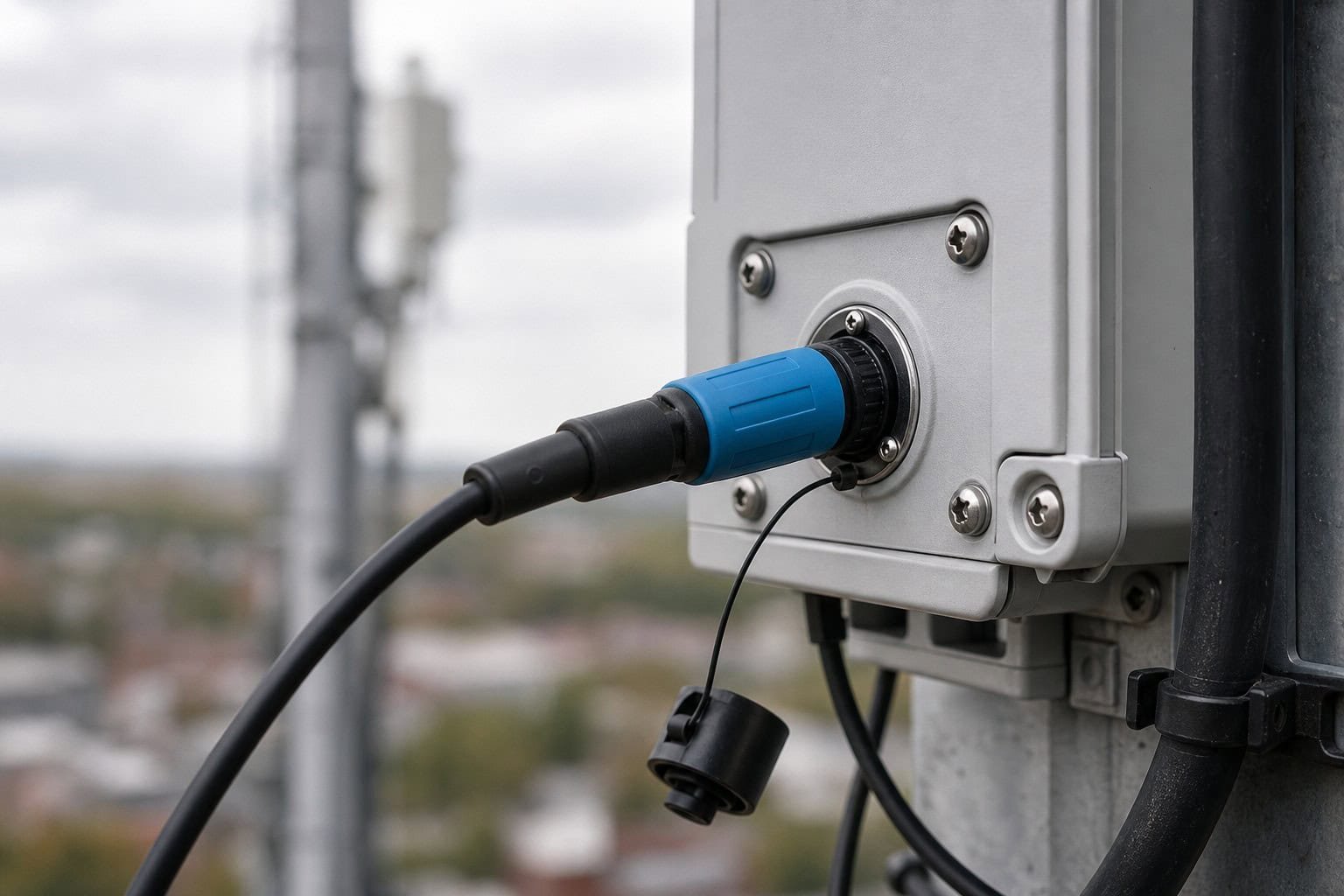
The cable entry point at the rear of the connector is a common failure location in chemical environments, because the transition from cable jacket to connector backshell creates a crevice that traps liquid and accelerates corrosion. A correctly specified backshell for chemical environments uses a compression gland that seals both against the cable jacket and against the connector shell, with no exposed metal in the crevice zone. The cable jacket material must also be compatible with the chemical environment, because a backshell that seals correctly against a jacket that is being chemically attacked by the process environment provides only temporary protection.
For installations requiring non-standard cable jacket materials or unusual cable entry geometries, customised connector solutions that integrate connector and cable entry into a single designed assembly offer better long-term reliability than a standard connector with field-modified backshell arrangements.
Documentation and Traceability
Chemical processing and offshore installations are often subject to formal process safety management requirements that demand documentation of every component in a hazardous area circuit. Connectors specified for these applications should come with full material declarations, plating specifications, seal compound identification and test certificates for the sealing ratings claimed. This documentation supports the safety case for the installation and simplifies maintenance planning over the equipment’s life.
Reputable connector manufacturers in India supplying to process and offshore industries maintain full material and test documentation as a standard part of their quality system, and can provide this documentation in the format required by the customer’s safety management programme.
Conclusion
Chemical environment connector specification requires going beyond the IP rating and asking systematic questions about shell material, insert compound, contact plating, seal compound and cable entry protection — all assessed against the specific chemical exposure profile of the installation. The incremental cost of correct specification is small relative to the cost of a connector failure in a process plant or offshore environment. Engage the manufacturer early with the chemical exposure data for the application, and validate the proposed specification against that data before the design is frozen.