A lot of small businesses have leads coming in but no real system moving them toward a purchase. That gap is almost always a missing sales funnel strategy, not a lack of interested prospects.
1. Understanding the Funnel Stages Realistically
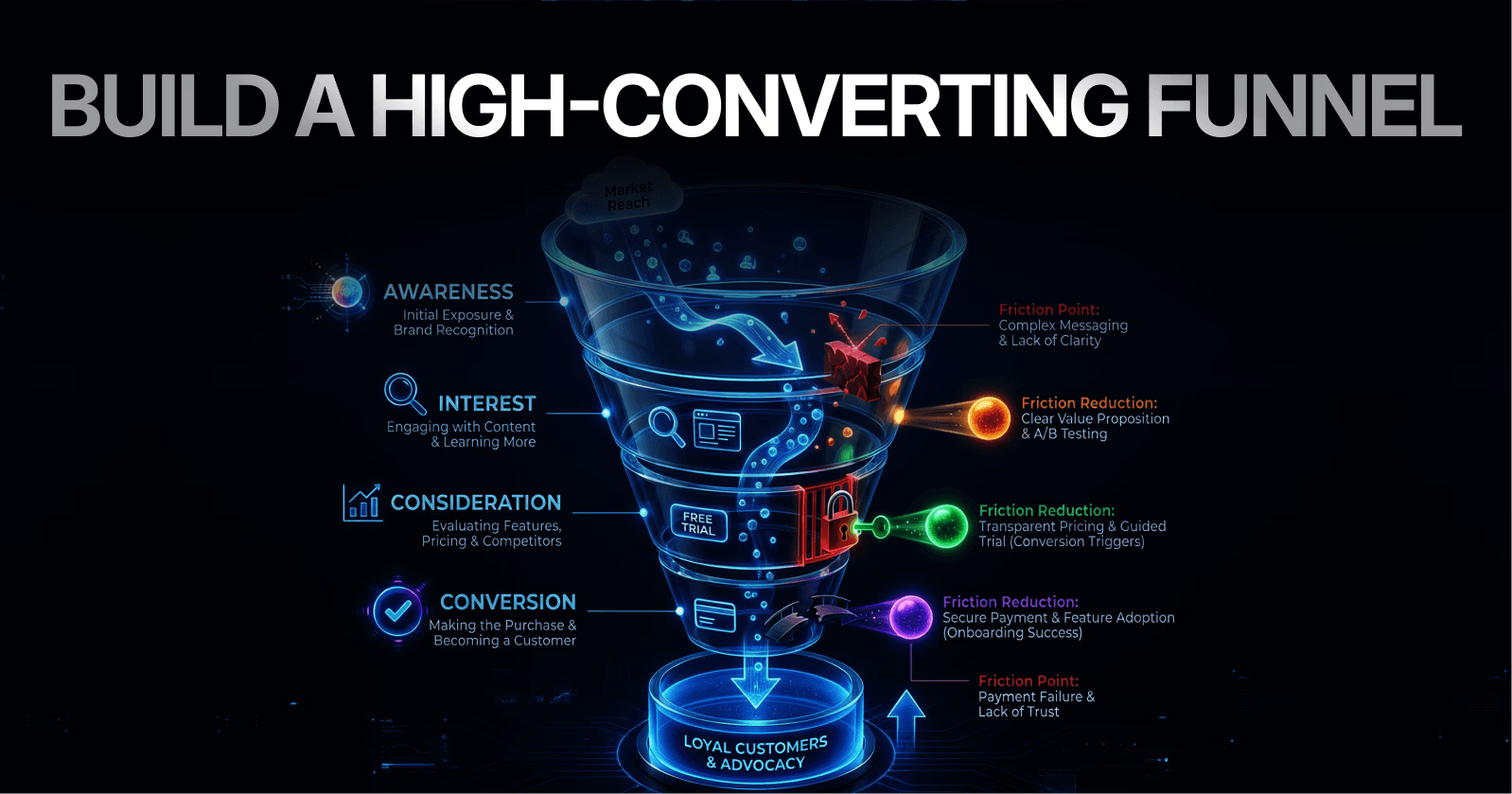
Quick answer: A practical sales funnel strategy typically covers four core stages — awareness, interest, decision, and action — with each stage requiring distinctly different content and messaging, not a one-size-fits-all pitch repeated throughout.
2. Awareness Stage: Attracting the Right People
Bringing in the wrong audience creates a funnel that looks busy but converts poorly. Clear targeting at the top matters more than raw traffic volume.
3. Interest Stage: Building Trust Before Selling
- Educational content that solves a small problem for free
- Case studies or testimonials relevant to their specific situation
- No hard pitch yet — this stage is about credibility, not conversion
4. Decision Stage: Removing Friction and Doubt
This is where comparison happens. Clear pricing, honest FAQs addressing real objections, and social proof matter far more here than flashy marketing copy.
5. Action Stage: Making the Purchase Genuinely Easy
Quick answer: A well-optimized sales funnel strategy minimizes friction at the action stage specifically — fewer form fields, multiple payment options, and immediate confirmation — since even small friction here causes significant drop-off.
6. Where Most Funnels Leak the Most
Businesses often obsess over top-of-funnel traffic while ignoring that most drop-off happens between interest and decision, where prospects have questions or doubts nobody’s addressing directly.
7. Retargeting Warm Leads Who Didn’t Convert
Not everyone converts on the first pass through the funnel. A structured retargeting approach, email sequences or ads specifically for people who showed interest but didn’t buy, recovers meaningful revenue that would otherwise be lost.
8. Measuring Funnel Performance Properly
Track conversion rate at each individual stage separately, not just overall lead-to-sale conversion. This reveals exactly where the funnel is leaking rather than leaving you guessing.
[link to related guide about email marketing for lead nurturing here]
FAQ
Q: How long should a sales funnel take to convert a lead? This varies enormously by industry and price point — a low-cost product might convert in days, a high-ticket B2B sale might take months.
Q: Do small businesses really need a formal sales funnel strategy? Yes — even informal versions benefit significantly from structured stages rather than an undifferentiated approach to every prospect.
Q: What’s the most commonly neglected stage of a sales funnel? The interest and decision stages are often neglected in favor of top-of-funnel traffic generation and bottom-of-funnel hard selling.
Q: How important is retargeting in a sales funnel strategy? Very — most prospects don’t convert on their first interaction, making retargeting a significant recovery opportunity.
Q: What tools are commonly used to build and track a sales funnel? CRM platforms, email marketing tools, and landing page builders are commonly combined to build and measure funnel performance.
Conclusion
A working sales funnel strategy isn’t about fancy software — it’s about matching the right message to each stage of a prospect’s decision process and removing friction at the point of purchase. Map your current funnel honestly, find where the biggest drop-off happens, and fix that one stage before worrying about the rest.