
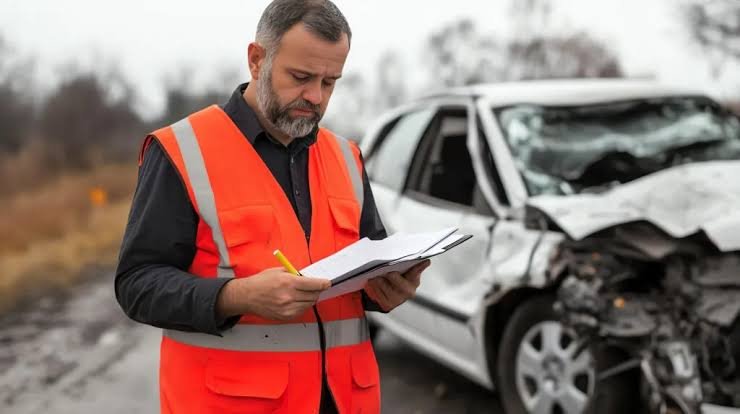
When something goes wrong, people naturally want a simple explanation. A product failed. A vehicle crashed. Someone got injured. A business suffered a loss. It sounds straightforward until the questions begin.
Why did it happen? Could it have been prevented? Was a warning missing? Was the equipment maintained properly? Did another factor contribute to the incident?
Legal disputes involving products and accidents often depend on answers that aren’t obvious from photographs, police reports, or witness statements alone. Technical evidence may be scattered across product manuals, maintenance records, vehicle data, inspection reports, medical documents, videos, and other sources.
Putting those pieces together requires patience and specialized knowledge.
That is where qualified experts can provide useful perspective. Their job isn’t to decide who wins a case. Instead, they examine evidence and explain technical issues so attorneys and decision-makers can understand what the facts may actually show.
Product Problems Can Have Several Possible Causes
A defective product claim isn’t always as simple as saying, “The product broke, so the product was defective.”
There are many possibilities.
A component might have been poorly designed. A manufacturing error could have affected one batch. Instructions may have been unclear. A warning might not have addressed a foreseeable danger. On the other hand, improper installation, maintenance, or use could also have played a role.
This is why product liability disputes often require careful technical investigation.
An expert may review design drawings, manufacturing records, testing information, user instructions, safety standards, photographs, damaged components, and other available evidence. They can then consider whether the product’s design or condition was consistent with accepted practices and whether a particular failure could reasonably have contributed to an injury.
The details matter. A small change in material, assembly, or operating conditions can sometimes make a substantial difference.
Accident Scenes Don’t Always Tell the Whole Story
After a collision or other accident, the physical scene can change quickly.
Vehicles get moved. Debris is removed. Weather changes. Road conditions are altered. Witnesses may remember events differently as time passes.
Photographs and videos can preserve some information, but they rarely answer every question.
This is where accident reconstruction can become useful. A qualified professional may examine vehicle damage, roadway evidence, photographs, video footage, measurements, event data, witness accounts, and other records to develop an informed understanding of how an incident unfolded.
The process can involve calculations, physics, engineering principles, and sometimes computer modeling.
Importantly, reconstruction isn’t about creating certainty where the evidence doesn’t support it. If important information is missing, a responsible expert should acknowledge that limitation.
The Questions Experts Ask Are Often More Important Than the Answers
Good investigation begins with good questions.
Instead of immediately deciding what caused an accident, an expert may ask what alternative explanations exist. If a product failed, they might investigate whether the failure occurred because of design, manufacturing, misuse, wear, or another condition.
That approach helps prevent confirmation bias.
It’s easy to notice evidence supporting an existing theory while overlooking evidence that points somewhere else. A disciplined professional does the opposite. They actively test the theory.
If the theory survives that process, it becomes more convincing. If it doesn’t, discovering the weakness early can be extremely valuable.
Different Cases Call for Different Expertise
There isn’t one type of expert who can handle every technical dispute.
A product investigation might require someone with experience in mechanical engineering, materials science, manufacturing, or human factors. A traffic collision could involve automotive engineering, physics, or transportation expertise.
Other cases may involve medicine, accounting, construction, economics, environmental science, or digital technology.
Understanding the expert witness focus areas that are relevant to a particular matter can help legal teams identify the right specialist instead of simply choosing someone with impressive general credentials.
Relevance matters more than a fancy résumé.
An expert with years of experience in one field may have little to contribute to a highly specialized question outside that field.
Documents Can Reveal What Happened Before the Incident
Physical evidence tells only part of a story.
The events leading up to an accident or product failure may be documented in emails, inspection reports, repair records, purchase orders, engineering drawings, maintenance logs, or internal communications.
These records can establish a timeline.
Imagine a piece of industrial equipment fails and causes an injury. At first, attention might focus entirely on the damaged component. But maintenance records could show that the component had been inspected several times in the months before the incident.
Another document might reveal that employees had previously reported unusual behavior.
Suddenly, the investigation has a much broader context.
Experts can help connect these records with physical evidence and determine which details are actually relevant.
Testing and Methodology Matter
An expert opinion should have a logical foundation.
Attorneys should understand what information the professional reviewed and how conclusions were reached. Was the damaged product examined? Were measurements taken? Were industry standards considered? Was testing performed? Were alternative causes evaluated?
These questions matter because a confident statement isn’t automatically a reliable one.
A strong expert can explain the reasoning behind an opinion step by step. They should also be able to identify assumptions and acknowledge where evidence is incomplete.
That’s particularly important when the opposing side has its own expert.
Two professionals can disagree without either one being careless. Sometimes they have different evidence, different methodologies, or different interpretations of the same technical information.
Understanding the reason for the disagreement is the important part.
Clear Explanations Make Technical Evidence More Useful
Legal proceedings aren’t filled exclusively with engineers, scientists, mechanics, or other specialists.
Judges and jurors may have no technical background at all.
An expert therefore needs to communicate.
That doesn’t mean avoiding technical details. It means explaining those details in a way that gives people a chance to understand them.
For example, instead of presenting a complicated calculation without context, an expert might explain what the calculation measures, why it matters, and how it relates to the physical evidence.
A simple analogy can sometimes accomplish more than a page of jargon.
The goal is clarity, not theatrics.
Digital Evidence Is Becoming More Important
Modern products and vehicles can generate substantial amounts of digital information.
Vehicles may contain electronic event data. Smartphones can preserve location or video information. Security systems may record an accident from several angles. Manufacturing equipment can maintain operational logs.
This evidence can be extremely useful, but it needs careful interpretation.
A timestamp may not tell the entire story. A video may begin after an important event has already occurred. Electronic data may require specialized knowledge to understand correctly.
More data doesn’t automatically mean better evidence.
Someone still needs to determine what the information actually establishes.
Experts Can Help Before a Lawsuit Reaches Trial
Expert analysis isn’t necessarily something that begins after litigation is fully underway.
Attorneys may seek technical input during early case evaluation. A specialist can review available evidence, identify missing information, assess whether a theory is technically plausible, and suggest questions that deserve further investigation.
This can influence settlement discussions too.
If an expert finds that a claim has strong technical support, the legal team can approach negotiations with greater confidence. If the analysis exposes a significant weakness, the team has an opportunity to reconsider its strategy.
Neither outcome is a waste of time.
Good analysis is useful precisely because it tells people more about the situation than they knew before.
Independence Builds Credibility
A professional expert shouldn’t simply become an advocate for the person who hired them.
Their responsibility is to provide an honest, evidence-based analysis within the limits of their expertise.
That means acknowledging uncertainty when uncertainty exists.
It also means being willing to say that a particular conclusion isn’t supported by the available evidence. That can be difficult to hear, especially when a legal team has invested heavily in a particular theory.
Still, credibility is valuable.
An expert who recognizes limitations may be viewed as more trustworthy than someone who claims absolute certainty about every detail.
Bringing the Evidence Together
Product failures and accidents are rarely explained by one photograph, one witness, or one document.
Usually, the answer emerges from several pieces of evidence fitting together.
Technical experts can help connect those pieces. They can examine physical conditions, analyze records, consider alternative explanations, and explain specialized concepts in practical language.
But their role has limits. They cannot recreate every event perfectly, and they shouldn’t pretend otherwise.
What they can do is make complicated evidence easier to evaluate.
In the end, that’s the real purpose of expert analysis: not to make a legal dispute sound more complicated, but to make the underlying facts clearer.
When the stakes are high and the answer isn’t sitting plainly on the surface, careful technical reasoning can provide something everyone involved needs — a better understanding of what actually happened.