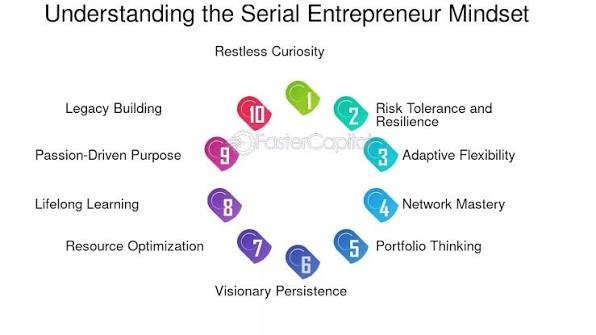
Some founders build one company and spend a decade on it. Others seem to launch venture after venture, sometimes in completely unrelated industries. What separates them isn’t luck — it’s a specific serial entrepreneur mindset that treats each business as a system to be learned, not a singular life’s work.
I’ve interviewed a couple of founders who’d built three or more ventures each, and the overlap in how they think was honestly more interesting than their individual success stories.
1. Detaching Identity From Any Single Venture
Quick answer: A core trait of the serial entrepreneur mindset is viewing each business as a project with its own lifecycle, rather than a permanent extension of personal identity — which makes pivoting or exiting far less emotionally difficult.
2. Treating Failure as Data, Not Verdict
Serial entrepreneurs tend to dissect failed ventures methodically — what specifically didn’t work, not a vague “it just wasn’t meant to be.” That analysis becomes the actual asset carried into the next venture.
3. Building Transferable Systems, Not Just Businesses
- Documented playbooks for hiring, even across different industries
- Reusable financial modeling templates adapted per venture
- A trusted network of specific vendors, freelancers, and advisors used repeatedly
4. Spotting Patterns Across Unrelated Industries
Someone who’s run a restaurant and later launched a SaaS company will often notice that customer retention principles overlap more than expected. That cross-pollination of pattern recognition is a genuine competitive advantage.
5. Knowing When to Exit, Not Just When to Start
Most single-venture founders struggle badly with exiting, even when it’s clearly the right call, because of sunk cost and identity attachment. Serial entrepreneurs generally have clearer, almost mechanical criteria for when to sell, shut down, or hand off a business.
6. Maintaining Capital and Network Discipline
Quick answer: Successful serial entrepreneurs typically keep a portion of proceeds from each exit as reserve capital for the next venture, rather than reinvesting everything immediately — reducing pressure to rush the next idea.
7. Staying Genuinely Curious, Not Just Ambitious
The ones who build multiple successful ventures tend to be driven by curiosity about how different problems and industries work, more than by pure financial ambition. That curiosity is what keeps the pattern-recognition engine running.
Practical Steps If You Want to Build This Mindset
- After any venture ends — success or failure — write a documented post-mortem, not just a mental note
- Build relationships with service providers and advisors you can bring into future ventures
- Set a personal rule for reserving a portion of any exit proceeds before reinvesting
[link to related guide about exiting a business successfully here]
FAQ
Q: Do serial entrepreneurs always succeed with each new venture? No — they fail plenty too, but they tend to fail faster and recover more efficiently.
Q: Is a serial entrepreneur mindset only relevant to people planning multiple businesses? Not entirely — the underlying principles, like detaching identity from outcomes, help even single-venture founders make clearer decisions.
Q: How do serial entrepreneurs decide which industry to enter next? Often based on pattern recognition from previous ventures or a genuine personal curiosity about an unsolved problem.
Q: Is it risky to keep starting new businesses instead of scaling one? It can be, particularly if attention is spread too thin — successful serial entrepreneurs are usually disciplined about running one primary venture at a time.
Q: Can this mindset be learned, or is it innate? It’s largely learned through deliberate reflection and documentation, not some inborn trait.
Conclusion
A genuine serial entrepreneur mindset isn’t about restlessness or an inability to commit. It’s a disciplined approach to treating every venture as a source of reusable knowledge — systems, networks, and pattern recognition that compound over time. Whether you’re building your first business or your fifth, borrowing even one or two of these habits, like documented post-mortems, can change how much you actually learn from the journey.