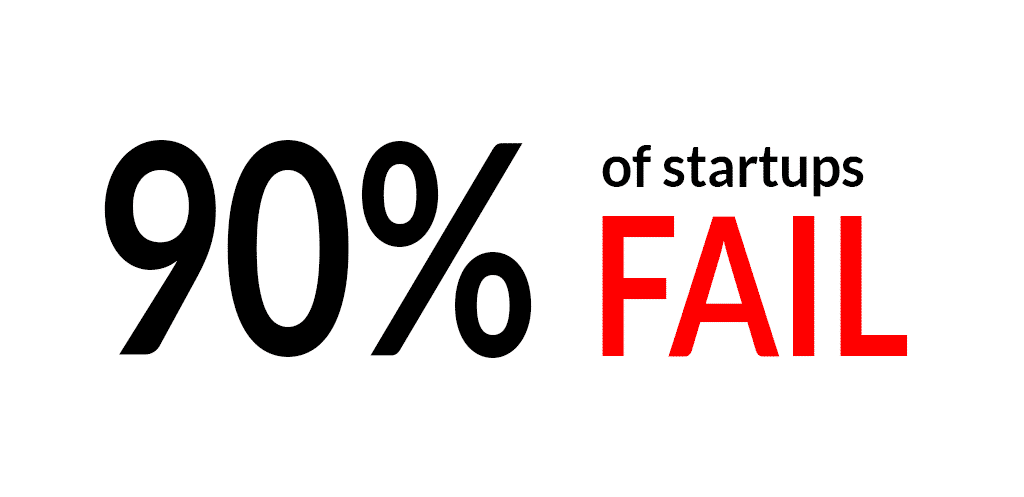
Everyone’s heard the stat: roughly 90% of startups fail. It gets thrown around so often it’s lost its sting. But when you actually dig into why startups fail, the reasons are surprisingly repetitive — and mostly avoidable.
I’ve watched this play out closely with three founders in my own network over the last five years. Two failed. One didn’t. The pattern wasn’t talent or funding. It was something much more boring.
1. Building Something Nobody Actually Wants
Quick answer: The number one reason why startups fail is building a product for a problem that isn’t painful enough for customers to actually pay to solve — often discovered only after months of building, not before.
This is the classic “solution looking for a problem” trap. Founders fall in love with their idea before validating whether anyone else feels the same urgency.
2. Running Out of Cash Before Finding Product-Market Fit
- Burning too fast on hiring before revenue validates the model
- Underestimating how long the sales cycle actually takes
- No clear runway calculation from day one
3. Wrong Team, Wrong Roles
A brilliant technical founder without any go-to-market skill, paired with a co-founder who doesn’t understand the product deeply enough — this mismatch kills more startups quietly than any single bad decision does.
4. Ignoring Competition Until It’s Too Late
Some founders genuinely believe “we have no competitors,” which is almost always false. It usually means they haven’t looked hard enough, or they’re confusing “no identical competitor” with “no competing solution.”
5. Scaling Too Early
Scaling before you’ve nailed retention and unit economics just multiplies your problems faster. I’ve seen founders hire aggressively right after a good month, only to lay off half the team two quarters later.
6. Founder Conflict
Co-founder breakups are one of the quietest startup killers. Unclear equity splits, unclear roles, and unresolved resentment eventually surface — usually at the worst possible time, mid-fundraise or mid-crisis.
7. Poor Financial Discipline
Quick answer: Startups that track burn rate, runway, and unit economics weekly are significantly more likely to survive past year three than those that review finances only at fundraising time.
What Actually Improves Survival Odds
- Talk to at least 50 potential customers before writing serious code
- Keep a strict, tracked runway with monthly check-ins, not just annual budgeting
- Resolve co-founder equity and roles in writing, early, even when things feel friendly
[link to related guide about product-market fit validation here]
FAQ
Q: What percentage of Indian startups fail? Estimates vary, but figures broadly similar to the global 90% failure rate are commonly cited for Indian startups too.
Q: Is running out of money always the “real” reason startups fail? It’s usually the final trigger, but the root cause is often a weak product-market fit that made raising more money necessary in the first place.
Q: Can a strong team overcome a bad idea? Sometimes they pivot successfully — but a genuinely bad idea with no market pain point rarely survives even a great team.
Q: How long should a startup’s runway be at minimum? Most advisors suggest at least 12-18 months of runway at any given time.
Q: Does more funding reduce failure risk? Not necessarily — some well-funded startups fail faster because they scale spending before validating the model.
Conclusion
Understanding why startups fail isn’t about scaring yourself out of starting one. It’s about recognizing the patterns early enough to course-correct. Talk to customers before you build. Track your cash obsessively. Resolve co-founder issues in writing, not in hallway conversations. None of this guarantees success, but it dramatically improves your odds against a genuinely brutal statistic.